
Honda Acty Van
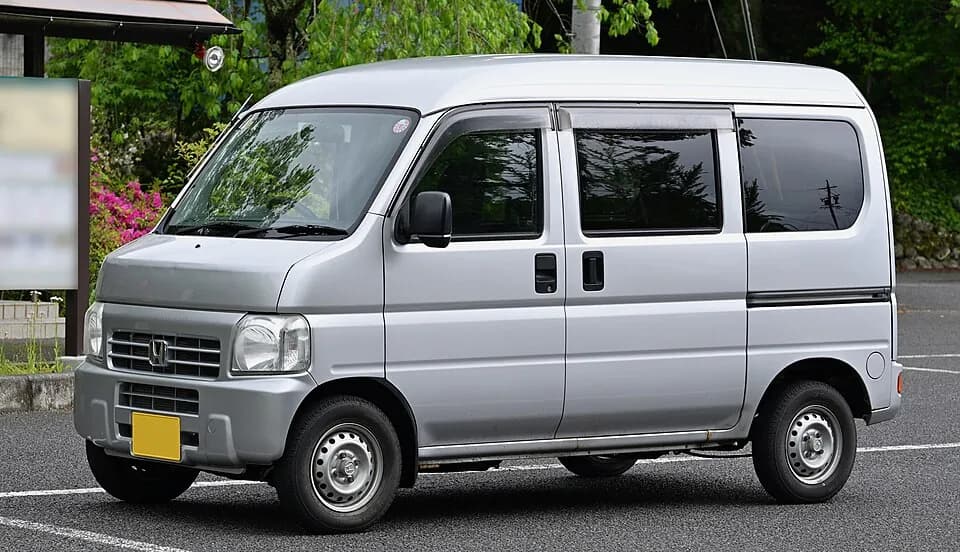
Honda's redesigned Acty Van launched in June 1999 with a mid-engine/rear-drive basis, high roof and dual sliding doors. The launch lineup included four-seat vans and two-seat cargo variants; cargo length and equipment differ by grade.
By The Kei Hub · Updated

Which specifications apply?
Honda's May 27, 1999 launch announcement for the Acty Van. The 2,420 mm wheelbase and 2,640 mm flat cargo length are launch figures; the cargo-length figure applies to SDX/PRO-A. Do not transfer truck bed specs to this van.
- Wheelbase
- 2,420 mm
- Flat cargo floor length
- 2,640 mm (SDX / PRO-A)
- Seating
- Four-seat van grades; two-seat PRO-A / PRO-B cargo grades
- Engine and output
- Hyper 12-valve PGM-FI; 46 PS at 5,500 rpm
Which years and generations should you compare?
June 1999 redesign
High-roof van with dual sliding doors. Honda offered four van types, including passenger seating and partitioned/two-seat cargo versions; 2WD and real-time 4WD variants were available.
A model year alone does not establish U.S. import eligibility. Follow the import planning guide and check the actual manufacture date.
What condition problems should you look for?
These are inspection priorities for an older vehicle, not a claim that every Acty Van has these defects. Use an independent inspection to assess the vehicle being sold.
- Inspect the rear and side doors, cargo floor and accessible engine area for leaks, corrosion or damage.
- Request timing-drive service records that match the van's chassis and engine.
- Verify seating, seat-belt equipment and any passenger-versus-cargo conversion work.
What should you check before an auction bid?
- Match the chassis code and grade to the registration/export paperwork and correct model-year manual.
- Request clear photos of the chassis plate, cargo floor, sliding-door tracks and underside; check for rust and repairs.
- Verify engine type, transmission, drivetrain, seating and safety equipment on the actual vehicle; do not infer them from the family name.
Use the auction sheet decoder as a reference, then ask the exporter to translate the full sheet and clarify the auction house's grading rules.
How should you plan maintenance and ownership?
Get the service manual that matches the chassis, engine and transmission. Have a mechanic establish a baseline for brakes, tires, belts, hoses, leaks and fluid condition. Oil grades, capacities, timing-drive parts and service intervals should come from that manual.
Before buying, review your state's registration and road-use rules, request an insurance quote for the actual vehicle, and put written transport and broker quotes into the import cost calculator.
Where do these model details come from?
Manufacturer history establishes the references above. It does not verify the condition, modifications or equipment of an individual vehicle.